
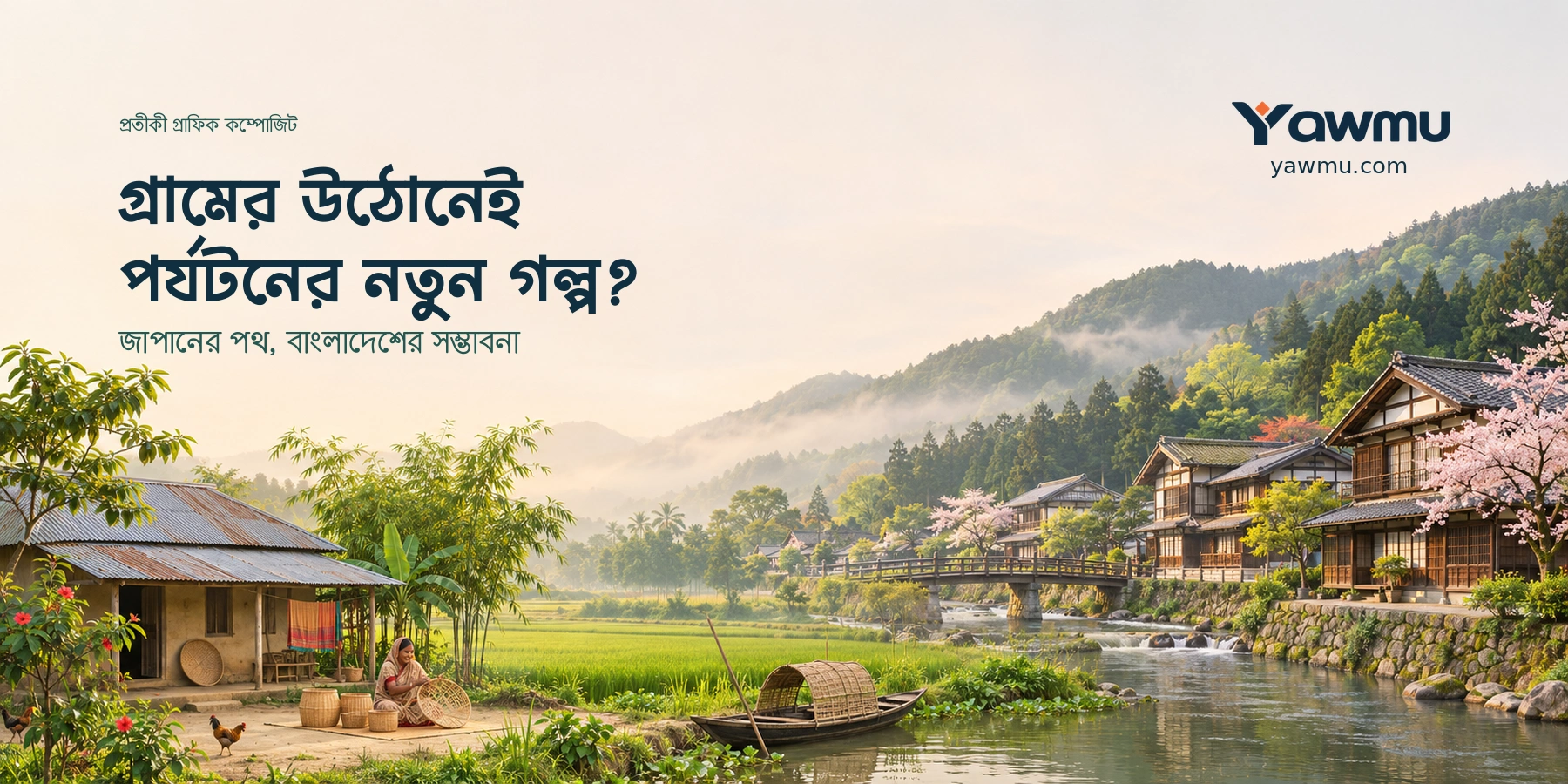
জাপান ভ্রমণ বললেই টোকিওর ব্যস্ত রাস্তা কিংবা কিয়োটোর মন্দিরের ছবি মনে আসে। অথচ দেশটি পর্যটকদের ডাকছে পুরোনো বাড়ি, কৃষকের রান্নাঘর আর ছোট ছোট জনপদেও। জাপানের গ্রামীণ পর্যটনের এই পথে বাংলাদেশের জন্যও শেখার আছে—আমাদের চেনা উঠোন, তাঁত আর নদীপাড়ের জীবন কীভাবে ভ্রমণের আকর্ষণ হয়ে উঠতে পারে।
বড় শহরের বাইরে নজর কেন
চীন থেকে আগমন কমে যাওয়ার মধ্যে গ্রামীণ এলাকায় বিদেশি ভ্রমণকারী টানার চেষ্টা বাড়াচ্ছে জাপান। দ্য বাংলাদেশ মনিটর ১৭ নভেম্বর এ নিয়ে প্রতিবেদন প্রকাশ করেছে।
চাপটা বোঝা যায় জাপানের পর্যটন সংস্থা JNTO-র সেপ্টেম্বরের প্রাথমিক হিসাবেই। ওই মাসে চীন থেকে আগমন ছিল ৪ লাখ ৩০ হাজার ৮০০—২০২৫ সালের সেপ্টেম্বরের তুলনায় ৪৪.৫ শতাংশ কম। একই সময়ে সব দেশ মিলিয়ে বিদেশি আগমন কমেছে ৫ শতাংশ।
জাপান তাই পর্যটনের আয় আরও বিস্তৃত এলাকায় পৌঁছাতে চায়। বড় শহরের বাইরে মানুষকে থাকার কারণ দিতে পারলে স্থানীয় খাবার, কারুশিল্প ও ছোট ব্যবসার জন্যও নতুন ক্রেতা পাওয়া সম্ভব।
পুরোনো বাড়ি কীভাবে ভ্রমণের ঠিকানা হলো
একটু পেছনে ফিরি। জাপানের পুরোনো বাণিজ্যপথে ছিল যাত্রীদের বিরতিস্থল। কোথাও বন্দর ঘিরে বসতি, কোথাও বিশেষ কোনো পণ্য বা কারুশিল্প ঘিরে জনপদ গড়ে উঠেছিল। সেই পথ, বাড়ি আর পেশার ইতিহাস এখন পর্যটকদের আগ্রহের বিষয়।
জাপানের জাতীয় পর্যটন সংস্থা জানায়, সংরক্ষিত পুরোনো বাড়ি, দোকান ও গুদামের কিছু অংশ থাকার জায়গা হিসেবে ব্যবহার হচ্ছে। অতিথি সেখানে শুধু রাত কাটান না; এলাকার খাবার, কাজ ও জীবনযাত্রার সঙ্গেও পরিচিত হন।
এই প্রস্তুতি বেশ পুরোনো। জাপানের কৃষি মন্ত্রণালয়ের ২০১৭ অর্থবছরের বিবরণে গ্রামে থাকার প্রচার, স্থানীয় খাবার তুলে ধরা এবং বিদেশি প্রতিনিধিদের পরিচিতিমূলক সফরের কথা রয়েছে। আজকের বাড়তি মনোযোগ সেই কাজকেই এগিয়ে নিচ্ছে।
‘নোহাকু’: গ্রামের সঙ্গে পরিচয়ের ভ্রমণ
জাপানে ‘নোহাকু’ বলতে কৃষি, পাহাড়ি বা জেলেপল্লিতে থেকে স্থানীয় খাবার ও জীবনযাত্রার অভিজ্ঞতা নেওয়ার কথা বোঝানো হয়।
এর অর্থ সহজ। একটি জায়গা দেখে ছবি তুলে চলে আসার বদলে সেখানে কিছুটা সময় কাটানো—রান্না শেখা, স্থানীয় কাজ দেখা কিংবা কারিগরের কাছ থেকে সরাসরি জিনিস কেনা। অতিথির খরচের একটি অংশ তখন গ্রামের ভেতরেই পৌঁছাতে পারে। সেই সুযোগ বাড়ে যখন থাকা, খাবার ও গাইডের কাজ স্থানীয় মানুষের হাতে থাকে।
২৭ মার্চ অনুমোদিত জাপানের ২০২৬–৩০ পর্যটন পরিকল্পনাতেও অঞ্চলগুলোয় ভ্রমণ ছড়িয়ে দেওয়া, যাতায়াতের উন্নতি এবং বাসিন্দাদের স্বাচ্ছন্দ্য রক্ষায় জোর দেওয়া হয়েছে। দেশটির লক্ষ্য, ২০৩০ সালে বছরে ৬ কোটি বিদেশি আগমন।
পর্যটককে গ্রামে পাঠানোর সঙ্গে তাঁকে সেখানে ভালোভাবে সময় কাটানোর ব্যবস্থাও করতে হচ্ছে। জাপানের এই অভিজ্ঞতা বাংলাদেশের জন্য বিশেষভাবে প্রাসঙ্গিক।
বাংলাদেশের গ্রামে কী আছে?
জামদানির একটি শাড়ি তৈরি হতে কত ধাপ পেরোতে হয়? শীতলপাটির নকশা ওঠে কীভাবে? দূর থেকে দেখতে আসা মানুষের কাছে এসবের উত্তরও ভ্রমণের আকর্ষণ হতে পারে। জামদানি বয়নশিল্প ও সিলেটের শীতলপাটি শিল্প UNESCO-র অমূর্ত সাংস্কৃতিক ঐতিহ্যের তালিকায় রয়েছে।
কারিগরের সঙ্গে বসে কাজটি বোঝা, স্থানীয় খাবার খাওয়া এবং এলাকার ইতিহাস শোনার মতো অভিজ্ঞতা ঘিরে ছোট সফর সাজানো যায়। তবে শুরুটা হতে হবে যাঁরা সেখানে থাকেন ও কাজ করেন, তাঁদের সঙ্গে কথা বলে।
১. কারিগরের সময়ের দাম দিন
কাজ দেখানো বা শেখানোও শ্রম। ছোট কর্মশালার জন্য কারিগরের পারিশ্রমিক ঠিক করতে হবে। ছবি তোলা ও বাড়িতে প্রবেশের অনুমতিও নিতে হবে। সরাসরি কেনাকাটার সুযোগ থাকলে অতিথি পণ্যের পেছনের মানুষটিকেও চিনতে পারবেন।
২. আগে শৌচাগার, পানি ও যাতায়াত
সুন্দর দৃশ্য দেখে মানুষ আগ্রহী হন; পরিচ্ছন্ন শৌচাগার, নিরাপদ খাবার-পানি ও নির্ভরযোগ্য যাতায়াত পেলে স্বস্তিতে ঘোরেন। রাতযাপনের ব্যবস্থা করলে অনুমতি, অগ্নিনিরাপত্তা ও ব্যক্তিগত গোপনীয়তার প্রস্তুতিও লাগবে।
৩. গ্রামের মানুষকে ব্যবসার অংশীদার করুন
খাবার কে দেবেন, গাইড কে হবেন, আয় কীভাবে ভাগ হবে—স্থানীয়ভাবেই এসব ঠিক করা দরকার। নারী ও তরুণদের সিদ্ধান্তে রাখলে তাঁদের দক্ষতাও কাজে লাগবে। অতিথির মোট খরচ ও কারিগরের প্রাপ্য আগে জানালে ভুল বোঝাবুঝি কমবে।
৪. যতটা সামলানো যায়, ততটাই অতিথি
একসঙ্গে অনেক মানুষ গেলে পানি, বর্জ্য ও চলাচলে চাপ পড়ে। গ্রামের সামর্থ্য অনুযায়ী দল ছোট রাখতে হবে। নৌভ্রমণে জীবনরক্ষাকারী সরঞ্জাম, শব্দ নিয়ন্ত্রণ এবং বাসিন্দাদের চলার পথ খোলা রাখার ব্যবস্থাও দরকার।
৫. যাওয়ার আগেই দরকারি তথ্য দিন
যাতায়াত, খাবার, মোট মূল্য, বাতিলের নিয়ম ও থাকার সুবিধা একটি বাংলা–ইংরেজি পাতায় লেখা যেতে পারে। শিশু, প্রবীণ বা চলাচলে অসুবিধা আছে এমন অতিথির জন্য কী ব্যবস্থা আছে, সেটিও স্পষ্ট থাকুক।
৬. ছোট সফর দিয়ে শুরু করুন
স্থানীয় সম্মতিতে সীমিত সফর চালিয়ে অভিজ্ঞতা নেওয়া যায়। কত মানুষ এলেন, তার সঙ্গে কারিগর কত পেলেন, বর্জ্য বাড়ল কি না এবং বাসিন্দারা স্বচ্ছন্দ কি না—এসবও দেখতে হবে। সমস্যা হলে তা মিটিয়ে পরের সফর সাজানোই ভালো।
একটি দিনের সফর ভাবুন
সকালে স্থানীয় গাইডের কাছে এলাকার গল্প শোনা। দুপুরে আগে ঠিক করা ঘরোয়া খাবার। বিকেলে আগ্রহী কোনো কারিগরের কাছে ছোট কর্মশালা, তারপর সরাসরি কেনাকাটা। স্থানীয় মানুষ চাইলে এবং প্রয়োজনীয় ব্যবস্থা থাকলে এমন সহজ আয়োজন দিয়েও শুরু করা যায়।
জাপানের মতো বাড়ি বানানোর প্রয়োজন নেই। বাংলাদেশের গ্রামের নিজস্ব খাবার, কাজ আর গল্পই হতে পারে তার পরিচয়। দরকার সেই পরিচয় তুলে ধরার যত্ন এবং অতিথি সামলানোর প্রস্তুতি।
পর্যটনের লাভ তখনই গ্রামের কাজে আসবে, যখন মানুষের হাতে আয় থাকবে, তাঁদের স্বাভাবিক জীবন চলবে এবং পরের অতিথির জন্যও জায়গাটি ভালো থাকবে।
আপনার এলাকার কোন খাবার, কারুশিল্প বা গ্রামের গল্প দেখতে মানুষ আসতে পারেন?
আরও পড়ুন: ইতিহাস বদলানো ছয় শহরের গল্প
উৎস
- দ্য বাংলাদেশ মনিটর: ১৭ নভেম্বর ২০২৬-এর প্রতিবেদন
- JNTO: সেপ্টেম্বর ২০২৬-এর প্রাথমিক আগমন পরিসংখ্যান, পৃষ্ঠা ৩
- Japan Tourism Agency: ২০২৬–৩০ পর্যটন পরিকল্পনা
- MAFF: গ্রামীণ পর্যটন ও Countryside Stay
- MAFF: ২০১৭ অর্থবছরের Countryside Stay কার্যক্রম
- JNTO: নোহাকু—কৃষি ও জেলেপল্লির অভিজ্ঞতা
- JNTO: ঐতিহ্যবাহী জনপদে থাকা
- UNESCO: বাংলাদেশের অমূর্ত সাংস্কৃতিক ঐতিহ্য
তথ্যসূত্র পর্যালোচনা: ১৮ নভেম্বর ২০২৬। JNTO-র পরিসংখ্যানে অবকাশভ্রমণের বাইরেও অন্যান্য বিদেশি আগমন অন্তর্ভুক্ত। ব্যানার: জাপান ও বাংলাদেশের দৃশ্য নিয়ে প্রতীকী গ্রাফিক কম্পোজিট।
Can an old house, a local meal and a village story become tourism assets? Japan’s countryside experiences show that a destination’s appeal need not be limited to big-city sights. But turning a Bangladeshi weaving community or riverside village into a meaningful destination takes more than beautiful scenery.
What is the news?
The Bangladesh Monitor reported on 17 November that Japan is stepping up efforts to attract international travellers to rural communities amid falling arrivals from China. Official policy also supports spreading travel to regional destinations. The renewed attention builds on years of work in regional destinations.
According to the Japan National Tourism Organization’s preliminary figures, arrivals from China in September 2026 numbered 430,800, down 44.5% from the same month in 2025. Total foreign arrivals fell 5% that month.
At a glance
- Japan wants more travel and overnight stays beyond major cities.
- Rural tourism combines accommodation, food and learning from local life.
- Promotion of these experiences predates the recent fall in Chinese arrivals.
- Bangladesh’s opportunity depends on local income, consent and environmental care.
A short history lesson: old routes, new experiences
People once stopped in settlements to trade, work or rest during long journeys. In Japan, the heritage of old post towns, ports and craft communities now forms part of travel experiences. JNTO describes preserved houses, shops and storehouses being repurposed as accommodation.
The buildings carry everyday history into a new role. Guests can learn about local architecture, meals and livelihoods while staying in places that communities have preserved.
Japan’s agriculture ministry was already documenting countryside stays, food promotion and familiarisation visits for overseas representatives in its fiscal 2017 reporting. The current push takes those earlier efforts further.
What is Nohaku?
Japan’s Ministry of Agriculture, Forestry and Fisheries describes Countryside Stay as travel involving stays in rural communities and contact with local life. JNTO’s Nohaku introduction includes farming, mountain and fishing villages, regional food and activities.
Imagine one visitor taking photographs and leaving, while another stays, learns to cook and buys directly from an artisan. The second visit can create more opportunities for local earnings—provided residents participate in ownership and services.
Why does it matter now?
Japan’s fiscal 2026–2030 tourism plan, approved on 27 March 2026, emphasises regional visitor dispersal, connections between tourism and transport, and a balance with residents’ lives. It retains the goal of 60 million international arrivals in 2030.
Reaching the countryside is only part of the task. Visitors also need good reasons to stay, dependable transport and services that work for residents as well as guests.
How could Bangladesh apply the idea?
For Bangladesh, the starting point could be a village’s own food, craft and stories, developed with the people who live and work there.
1. Build learning experiences
Short visits could introduce how Jamdani is woven or how Shital Pati is made. Both traditions appear on UNESCO’s intangible heritage lists. Small groups could learn with artisans’ prior agreement and fair payment for their time.
2. Prepare basic services before promotion
Clean toilets, safe drinking water, food hygiene, reliable transport and emergency contacts should come first. Any accommodation also needs checks on applicable permissions, fire safety, privacy and guest protection.
3. Put residents in control of services
Prices for meals, guiding, boat trips and crafts can be disclosed in writing. Clarify who receives income, how artisans are paid and who funds cleaning. Women and young residents should have a voice in local management.
4. Match visitor numbers to local capacity
Group sizes should reflect water supply, waste handling and residents’ comfort. Ask permission before entering homes or taking photographs. Suitable boat safety arrangements and noise limits are part of responsible tourism. Displacing normal village life to create a tourist stage is not a solution.
5. Make booking clear and information accurate
A Bengali–English information page can explain transport, total prices, inclusions, cancellation conditions, toilets and actual accessibility. Guests should know what to expect before they travel.
6. Start small and measure outcomes
A limited pilot visit could begin with local agreement. Measure local earnings, artisan payments, waste, complaints and resident satisfaction—not just visitor numbers. Reduce or stop visits if harm increases.
What could a day visit look like?
Morning: learn about local history with a resident guide. Lunch: a pre-arranged local meal. Afternoon: a small workshop with a willing artisan and direct purchases.
With local agreement and suitable facilities, a simple visit like this could be a useful place to start.
When does tourism create meaningful change?
Simply bringing tourists to a village does not guarantee development. Progress matters when guests learn, residents receive fair earnings and local life and nature remain protected. Bangladesh’s villages already have their own identity. Careful preparation can help visitors discover it while allowing local life to continue.
What food, craft or village story from your area could visitors learn about? Share this with someone interested in locally led tourism.
Related reading: Six cities that shaped history
Sources and verification
- The Bangladesh Monitor, 17 November 2026
- JNTO: September 2026 preliminary arrivals, page 3
- Japan Tourism Agency: 2026–2030 plan
- MAFF: rural development and tourism
- MAFF: fiscal 2017 countryside-stay initiatives
- JNTO: Nohaku
- JNTO: Traditional Town Stays
- UNESCO: Bangladesh’s intangible heritage
Sources reviewed on 18 November 2026. JNTO’s arrival figures include travellers other than holidaymakers. Banner: an illustrative composite of Japanese and Bangladeshi scenes.


মন্তব্য করুন